
Walking into more and more museums, art galleries, and various cultural venues today, you’ll find that exhibition halls are no longer divided by fixed walls. Previously, adjusting the flow of an exhibition often required major construction work, such as knocking down parts of solid walls. This was not only time-consuming and labor-intensive, potentially delaying subsequent exhibitions, but also resulted in unpleasant odors and dust that couldn’t dissipate naturally in a short time, creating an uncomfortable viewing experience. As can be seen, the inherent limitations of the architecture restrict the flexibility of the curatorial process.
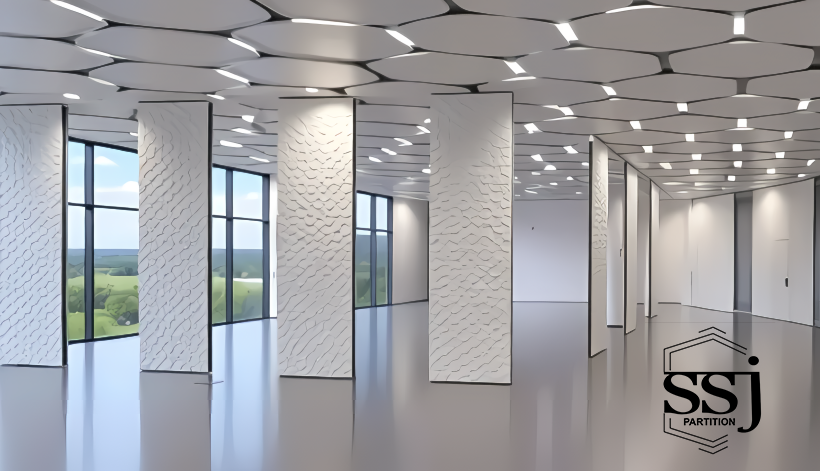
The emergence of operable partitions has completely broken this deadlock. It’s like equipping the venue with a freely adjustable “soft skeleton.” Curators can dynamically divide exhibition areas at any time according to different exhibition themes, as well as the type and era of the exhibits. For example, to host an exhibition of ancient calligraphy and paintings, partitions can be used to create a relatively quiet, softly lit independent exhibition area; to hold a contemporary art exhibition, large open public spaces can be immediately arranged. Even without altering the original building structure, temporary special exhibitions and permanent display areas can be seamlessly alternated quickly.
Operable partitions with glass panels further balance practicality and experiential elements. They clearly delineate different exhibition areas without completely severing the view, preserving the continuity of the space. Visitors in one area can vaguely glimpse exhibits in adjacent areas, greatly enhancing the immersive and fluid experience of the exhibition. Many venues also use these glass partitions as display windows, allowing for flexible combination and movement according to exhibition plans, creating entirely different visitor routes without being limited by the building’s original fixed layout.
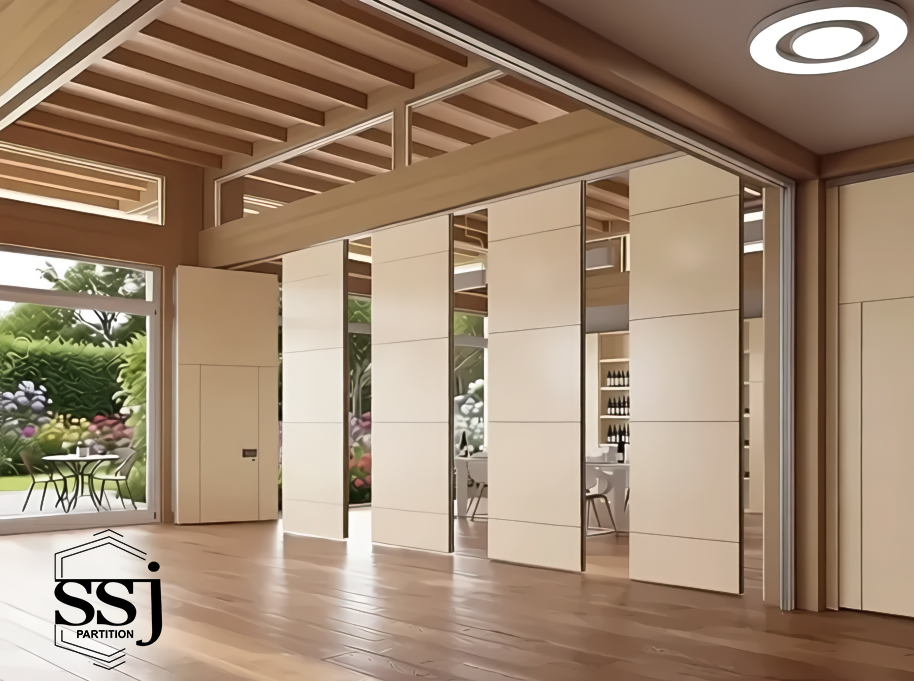
To meet the specific needs of cultural venues, today’s operable partitions are increasingly sophisticated in their detailed design. The panel surface supports customized patterns and textures, whether it’s a retro stone texture or a trendy abstract pattern, perfectly matching the theme and tone of different exhibitions, ensuring no clash between the partition style and the exhibition atmosphere. Some high-end products also integrate multimedia display modules on the partition surface, allowing visitors to directly view extended explanatory information about the exhibits as they approach the partition. When used in conjunction with perforated ceiling panels, they also achieve excellent acoustic control, effectively reducing echoes and noise interference within the exhibition hall, creating a more comfortable and quiet viewing environment for visitors.
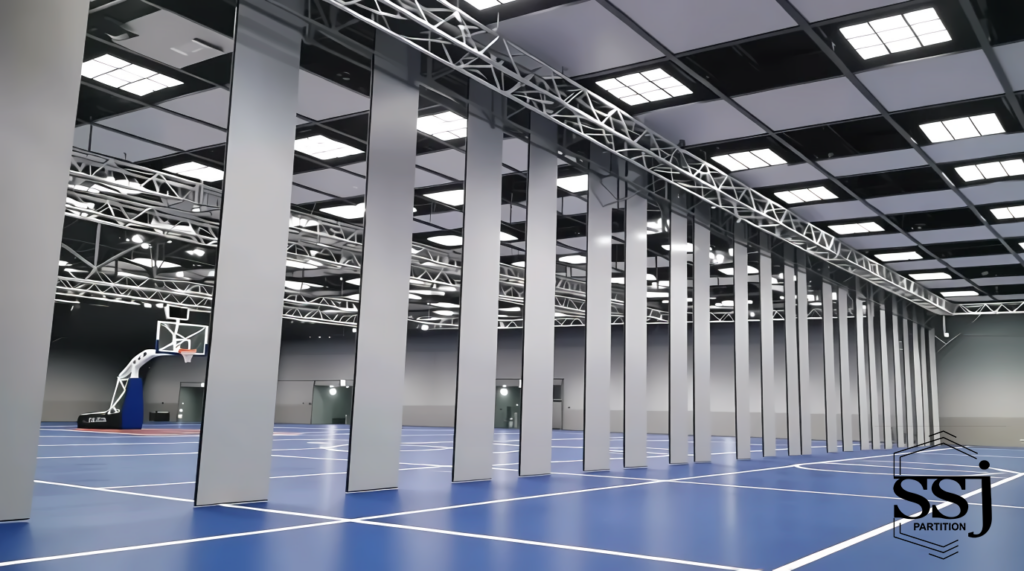
From the fixed and rigid spatial divisions of the past to the flexible combinations that suit every individual, operable partitions are becoming an essential feature for upgrading the experience of cultural venues. With extremely low renovation costs, they can unleash the infinite possibilities of space and achieve the dual empowerment of artistic expression and commercial operation.
Contact SSJ PARTITION to connect spatial narratives, adapt to diverse exhibition needs, and activate the value of your space.