
In the past, overseas buyers inquiring about movable partitions primarily focused on basic functionality: Can they divide a space? Do they slide smoothly? Are they competitively priced? Today, an increasing number of overseas buyers view movable partitions as a “spatial operating system.” Far from being mere walls, these systems serve as comprehensive spatial solutions that enable hotels, conference centers, office spaces, and exhibition halls to rapidly reconfigure their layouts and maximize operational efficiency.
Rapid Reconfiguration: Adapting Space to Evolving Needs
Overseas projects increasingly prioritize spatial flexibility. A banquet hall might serve as a training venue during the day, only to be transformed into a grand banquet space by evening. Similarly, conference rooms often need to shift frequently between small, medium, large, or extra-large configurations to accommodate varying group sizes. Movable partitions facilitate this transition, turning “fixed divisions” into “rapid reconfigurations.” Buyers pay close attention to the long-term stability of the track system and whether the space retains its aesthetic appeal after being reconfigured.
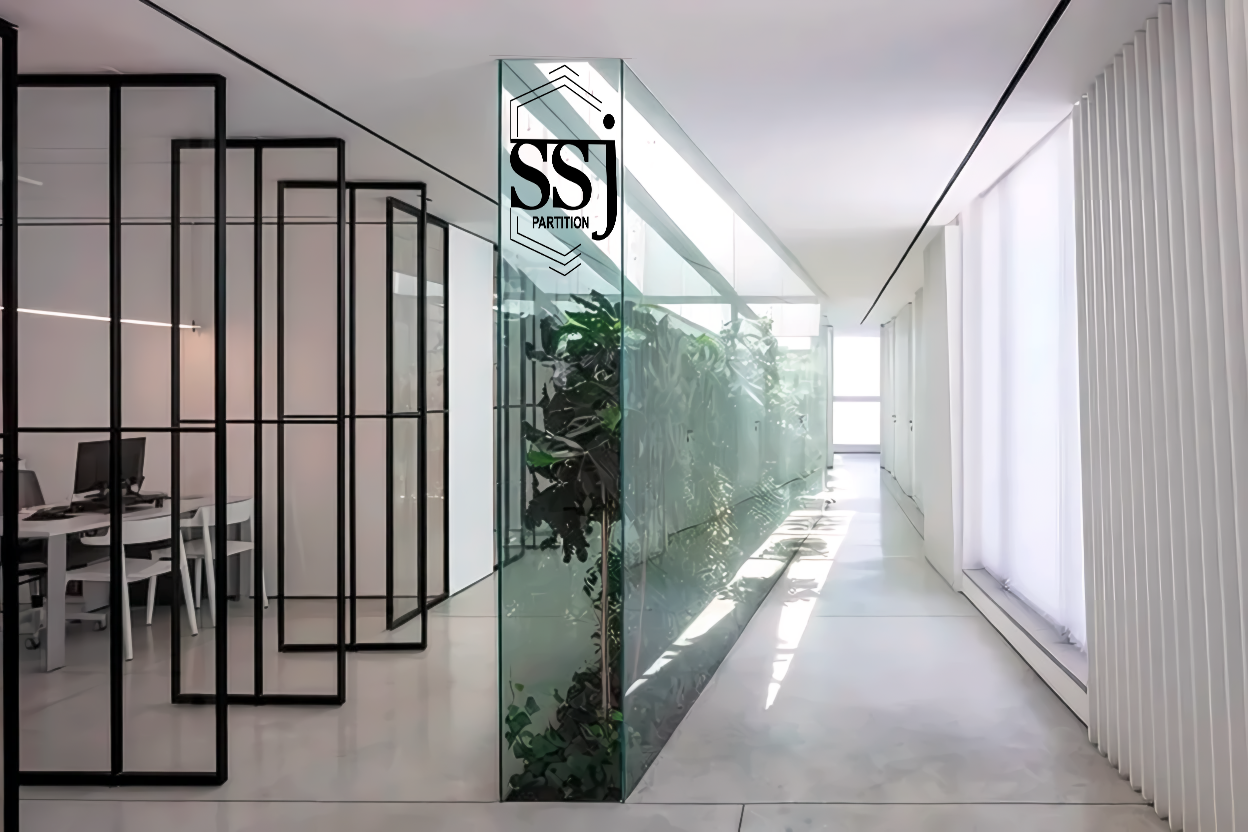
Acoustic Performance: A Critical Requirement for Conference Rooms and Banquet Halls
For hotels, conference centers, and co-working spaces, sound insulation is often a decisive factor. Buyers frequently ask: Can privacy be maintained when a space is divided? Will sound interfere between multiple events held simultaneously in a banquet hall? Consequently, buyers focus on technical details such as sound insulation ratings, sealing mechanisms, top and bottom edge treatments, and the thickness and composition of the partition panels.
Smart Integration: Making Partitions “Space-Aware”
As projects become increasingly “smart,” movable partitions are evolving beyond simple manual, sliding panels. Buyers are now looking for integration capabilities—can the partitions interface with lighting, audio systems, access control, or meeting reservation platforms? For instance, lighting modes might adjust automatically as the space is reconfigured, or conference room equipment might activate once the partitions are closed. In some large-scale venues, centralized control systems are even used to enhance overall management efficiency. Such integration transforms movable partitions from standalone building materials into essential components of a broader spatial management system.
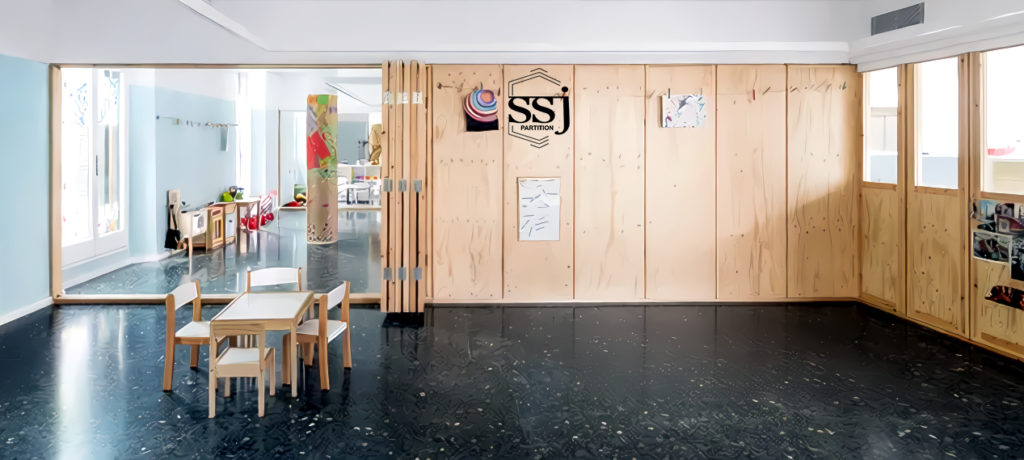
SSJ movable partitions do not merely provide a “wall”; rather, they offer a solution for maximizing space efficiency. By transforming a fixed area into a fluid asset, they enable a single venue to accommodate diverse business operations—this is the ultimate answer to how movable partitions should be applied today.