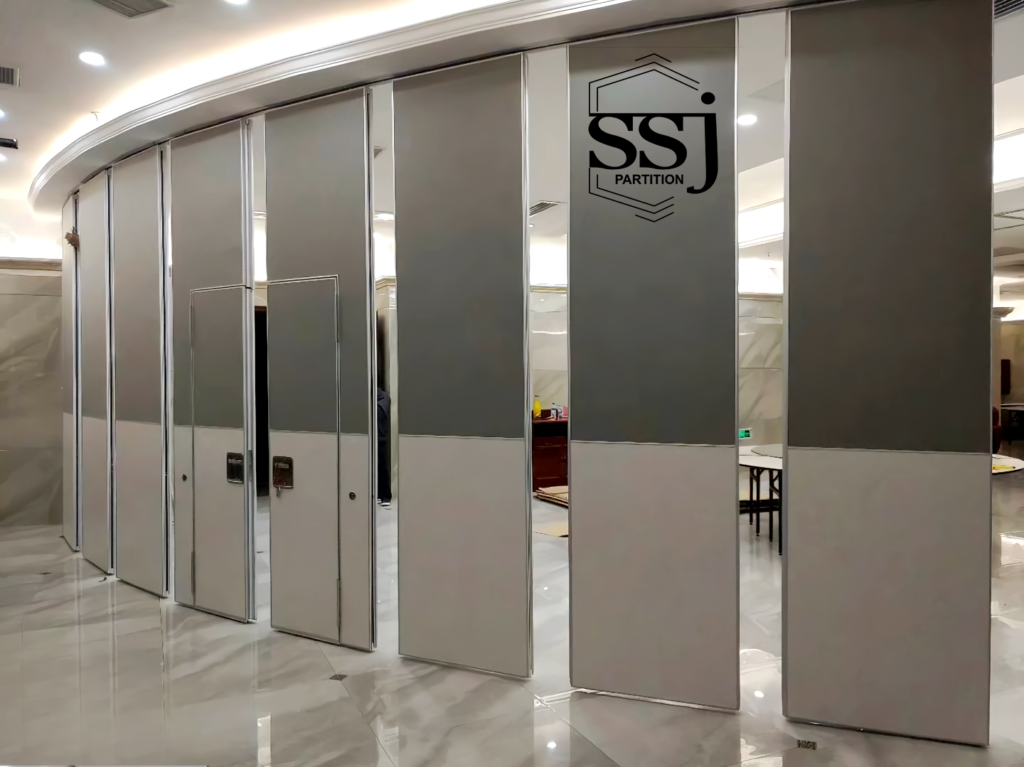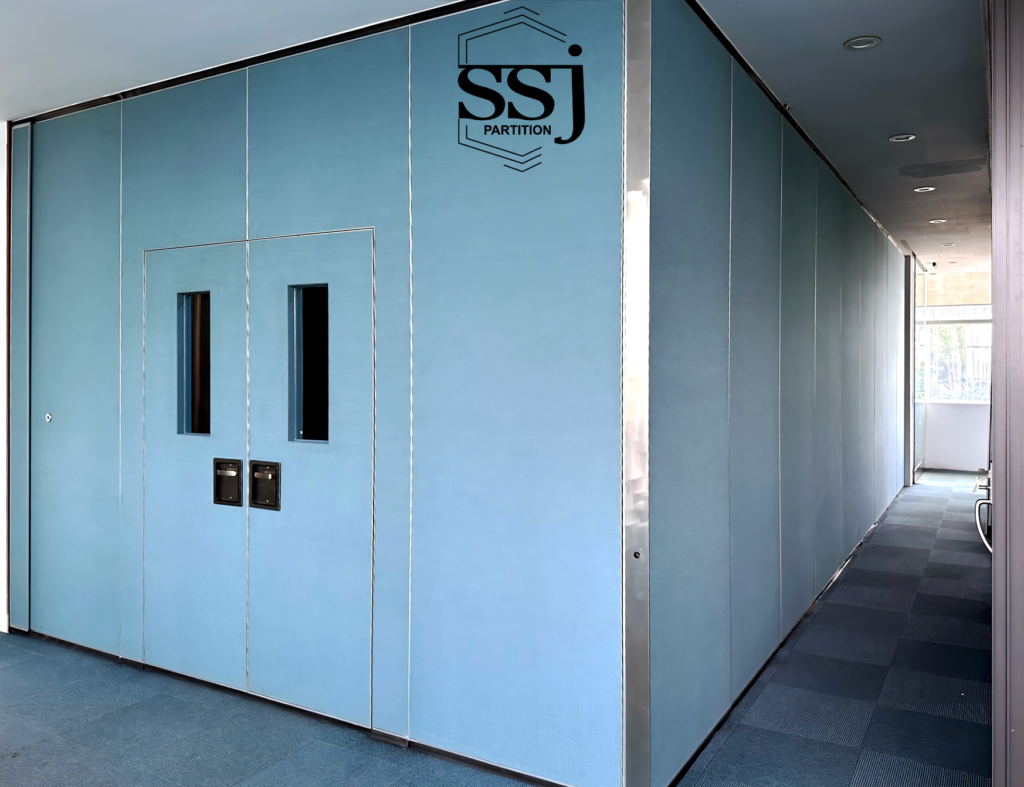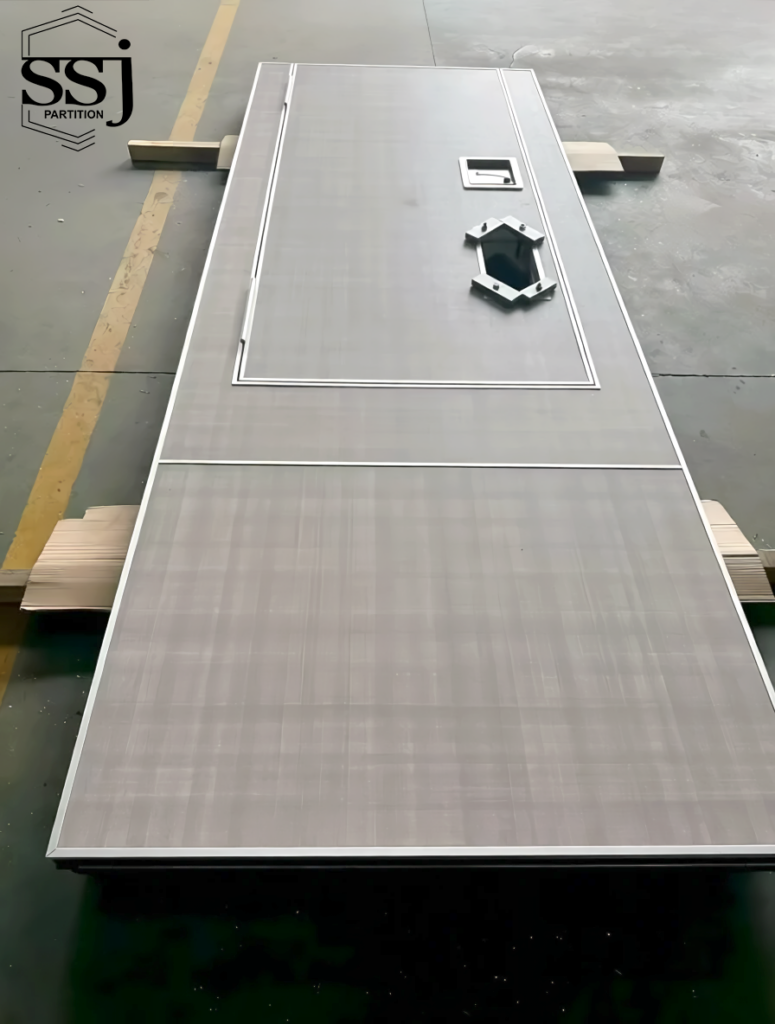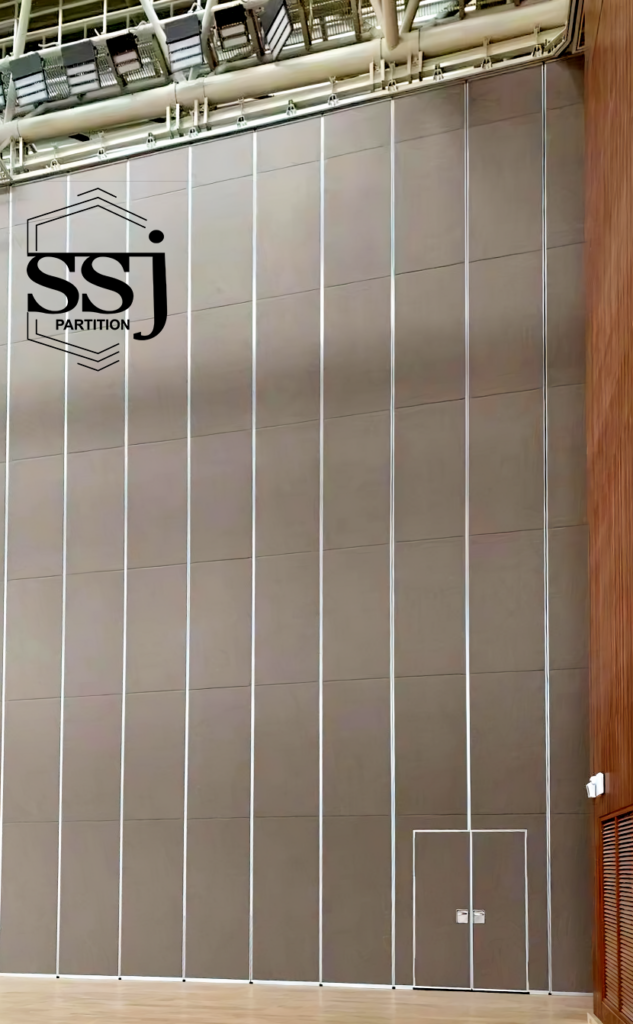
To address quick access between adjacent partitioned areas, many movable partitions are designed with pass doors. While this feature raises concerns for some customers—worrying about potential issues after installation that could affect usability, we’ll answer the most frequently asked questions to completely ease your doubts.
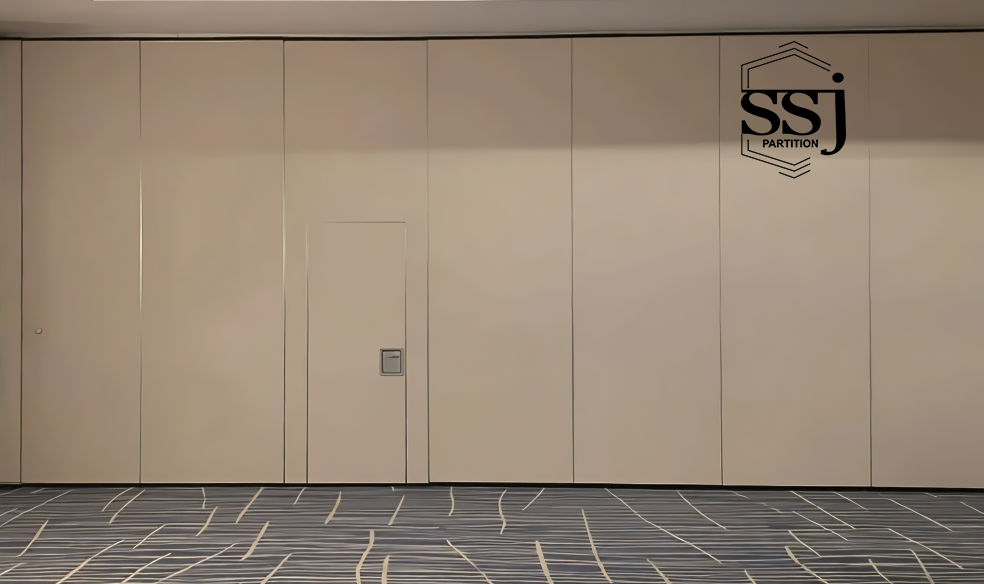
Q: Will the pass doors affect aesthetics?
A: The key lies in the manufacturing process and installation accuracy. When the doors and partitions are properly manufactured and installed, they have a unified overall style and harmonious appearance. This not only does not affect the aesthetics but actually enhances the overall texture and practicality of the space.
Q: What is the pass doors maximum size?
A: The width of the pass doors is usually calculated based on the overall size of the partition. Generally, it is recommended that the width of a single door’s should not exceed 1 meter and the height should not exceed 2.4 meters. Otherwise, it may cause the door to deform and affect its service life.
Q: Will the pass doors prone to warping?
A: Warping is usually caused by low-quality hardware or improper installation. Inferior hinges cannot withstand the door’s weight and frequent opening/closing, leading to fatigue and sagging within months. Pay special attention to hinge quantity and spacing, which must be based on door weight. Hinge axes should align along the same vertical line; otherwise, the pass doors may warp or fail to close properly. Before installing the partition, the track needs to be calibrated using a level to ensure that the door is vertical. Otherwise, due to gravitational force, it may cause the push-pull to be unsmooth and the deformation.
Q: Pass doors can fitted with locks?
A: Yes, specialized mechanical door locks designed for partitions should be installed. Selection depends on the door material and thickness, effectively meeting basic requirements for privacy and security.
Q: Will the pass doors compromise sound insulation?
A: Sealing strips around the pass doors tightly fit the frame, providing excellent soundproofing and dust resistance while reducing impact noise during operation.
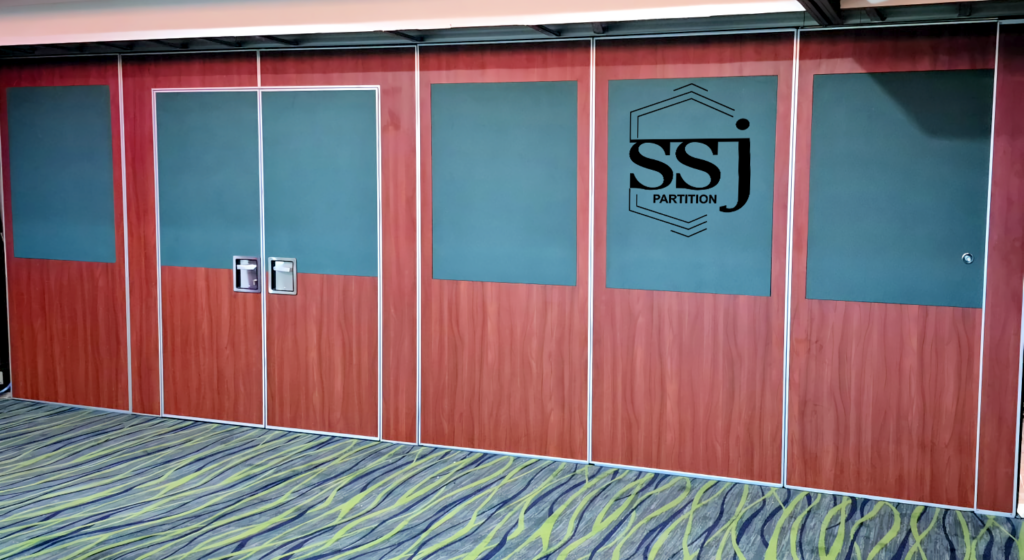
Now that we’ve addressed common concerns, here are several practical tips to help extend the lifespan of your movable partition:
1. Operate gently: Pull the pass doors horizontally by holding the handle—avoid lifting upward or applying diagonal force, which can distort the hinges. When closing, push the door fully until you hear the “click” of the latch engaging.
2. Regular inspection and adjustment: Suggest check hinge screws every six months for looseness. If the door sags and rubs against the floor, adjust its height using the adjustment screw on the hinge. Suggest clean track dust annually and apply a small amount of lubricant to ensure smooth movement.
3. Troubleshooting: If the pass doors fails to close properly, possible causes include aged sealing strips, door deformation, or lock tongue malfunction. Replace worn seals, realign panels, or replace the lock core as needed.
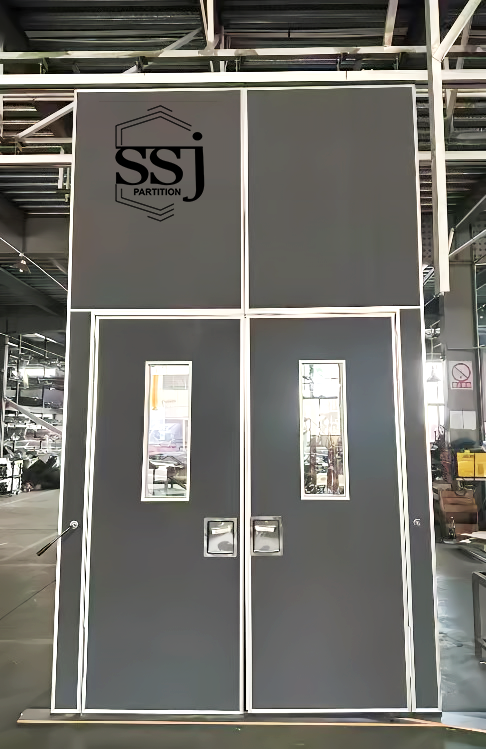
Pass door is not only the core element of the convenience of movable partitions, but also the “finishing touch” of movable partitions. As a high-frequency interactive component in the movable partition system, its opening and closing accuracy, sealing performance and long-term durability directly determine the user experience of the entire partition system. SSJ PARTITION has conducted many optimization tests on it, effectively reducing the implementation threshold brought about by high requirements, and making pass doors a truly stable and reliable practical highlight in the project.
SSJ PARTITION is a professional movable partition manufacturer. Choosing us means you’ll have access to a seasoned team that provides a complete closed-loop service from consultation and design to production and installation.